Overview of works
Following a customer report of sewage escaping from a manhole near Woodbastwick Road, Blofield, the IMR WR Alliance responded rapidly to investigate and resolve the issue. What initially appeared to be a localised blockage uncovered significant structural deterioration within a 138m section of 225mm concrete sewer.
Key challenges
- Emergency response – investigating and resolving a reported sewer surcharge within a tight timeframe
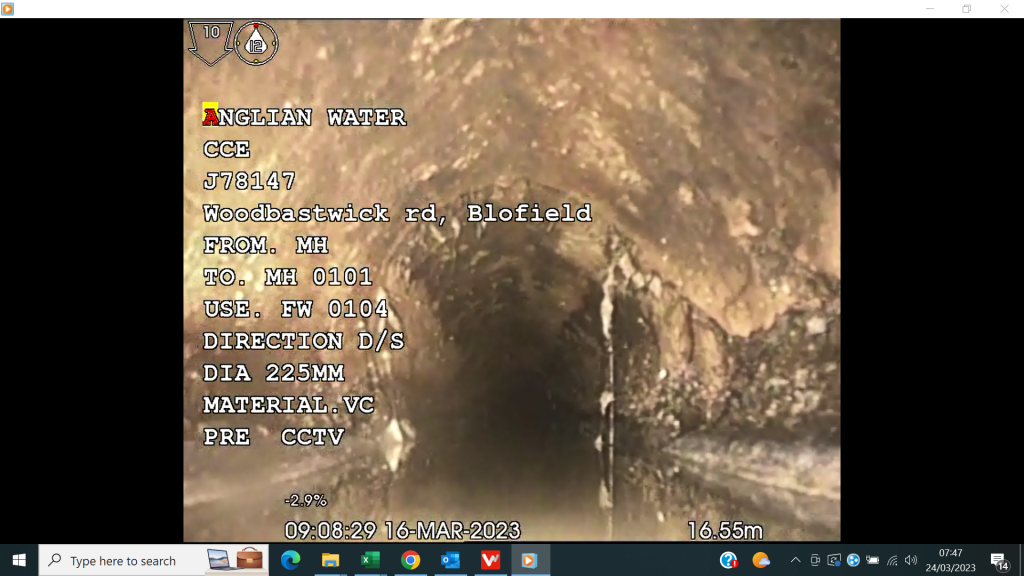
- Asset condition – severe hydrogen sulphide corrosion affecting 138m of concrete sewer
- Structural defects – failing joints, protruding seals, extensive cracking, holes and splits throughout the pipeline
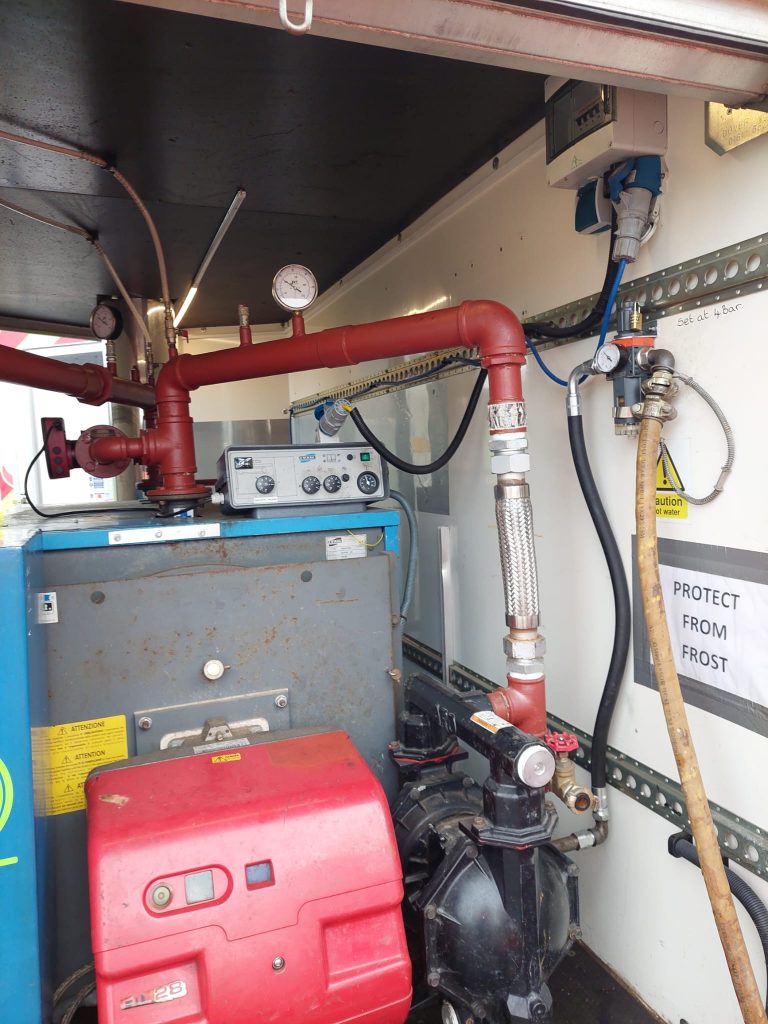
- Operational requirements – maintaining a consistent installation pressure for successful liner placement
- Environmental considerations – minimising excavation and disruption through the use of trenchless rehabilitation techniques
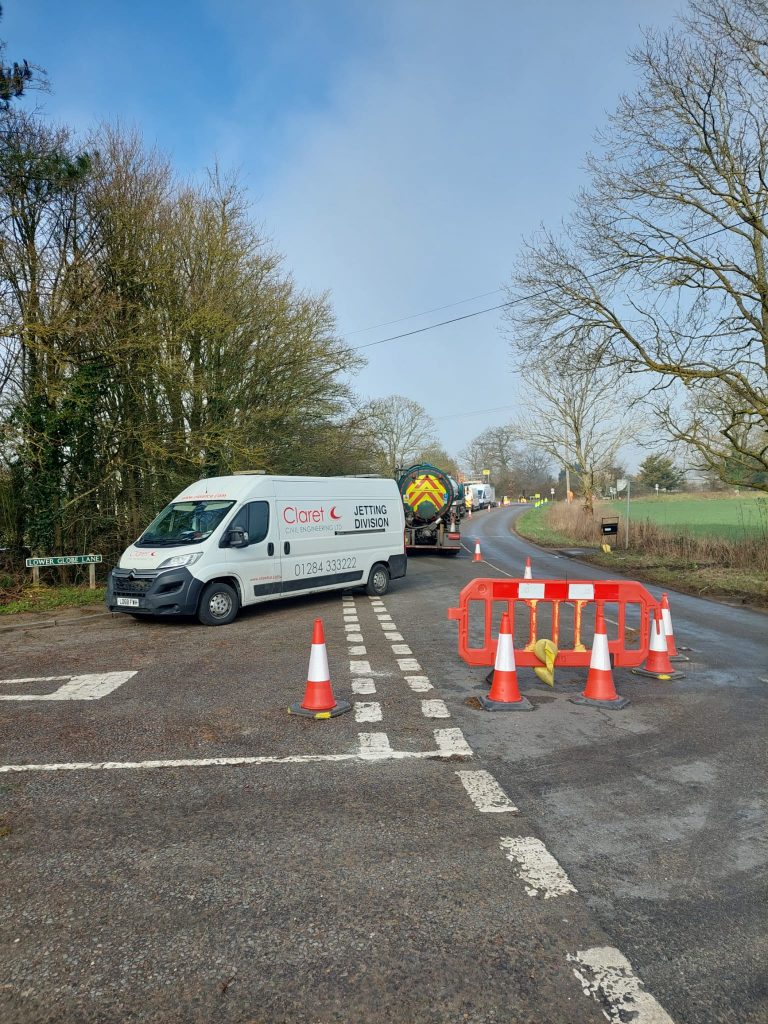
- Traffic management – safely accommodating specialist plant, equipment and materials during the works
Our approach
- Rapid mobilisation – a Claret Civil Engineering reactive team attended site immediately, identifying and clearing the blockage before surveying the network, all within three hours of the initial complaint
- Detailed investigation – CCTV surveys confirmed that the sewer had lifted in its invert, causing debris accumulation and blockage, while further inspections identified widespread structural deterioration
- Collaborative delivery – the project was seamlessly handed over from the reactive team to Claret’s Lining Division to develop a long-term rehabilitation solution
- Engineering innovation – a bespoke scaffold launching platform was designed and approved to provide a constant head of pressure throughout the lining installation process
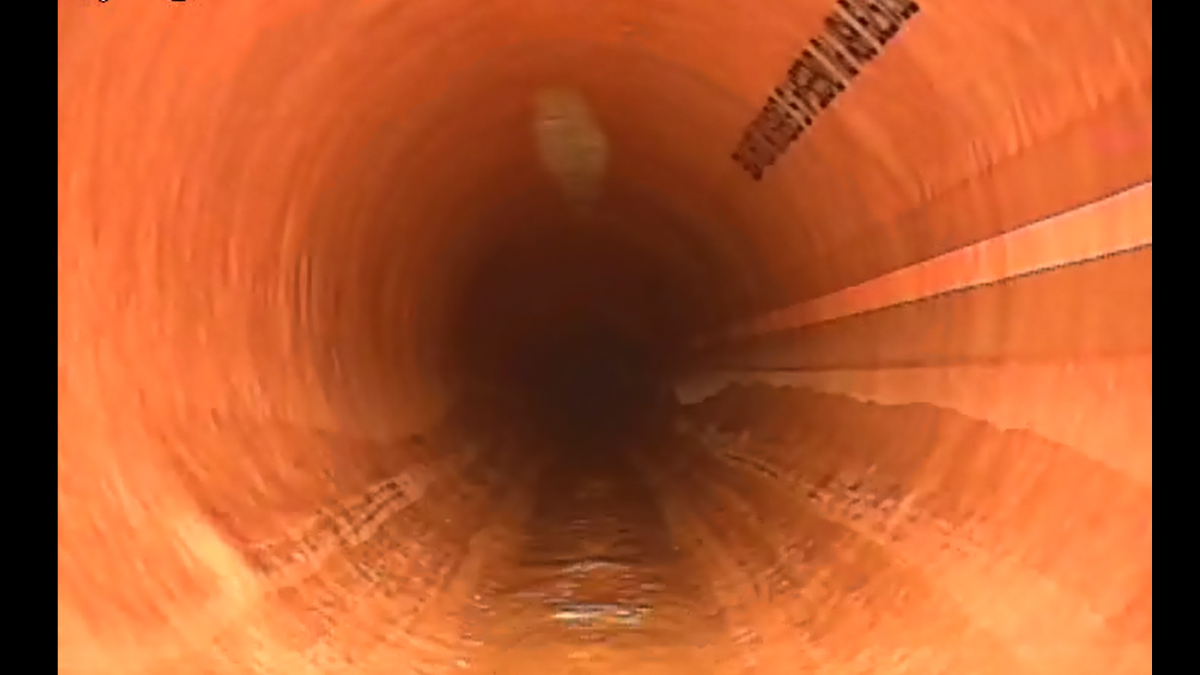
- Trenchless rehabilitation – installation of a 6mm polyurethane-coated felt liner impregnated with Water Research Centre-approved epoxy resin created a new structural pipe within the existing asset
- Flow management – the network was temporarily bypassed using an overland system, allowing the lining team to work within a dry sewer environment
Outcomes
- Customer-reported issue investigated, surveyed and actioned within three hours
- 138m of deteriorated 225mm concrete sewer successfully rehabilitated
- Structural defects including failing joints, cracks, holes and splits fully encapsulated within a new jointless liner
- New sewer asset expected to increase flow velocity by up to 30%
- Trenchless technology eliminated the need for extensive excavation, reducing environmental impact and disruption
- Significant carbon savings achieved through rehabilitation rather than traditional replacement methods
- Enhanced resilience of the sewer network, reducing the risk of future blockages, infiltration and structural failure
- Long-term protection provided against ongoing hydrogen sulphide attack